TEL:0086-18803691565
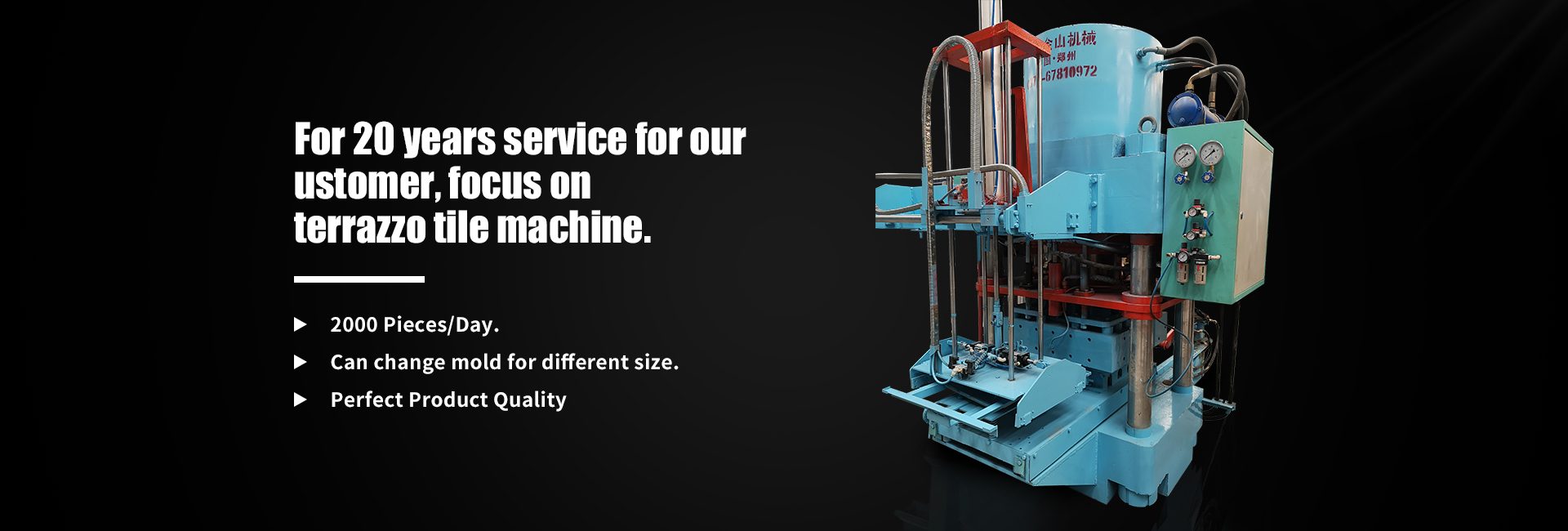
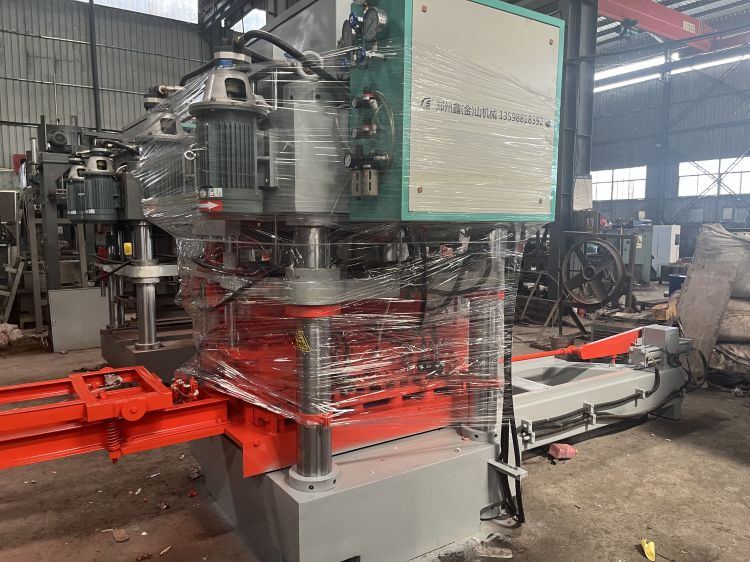
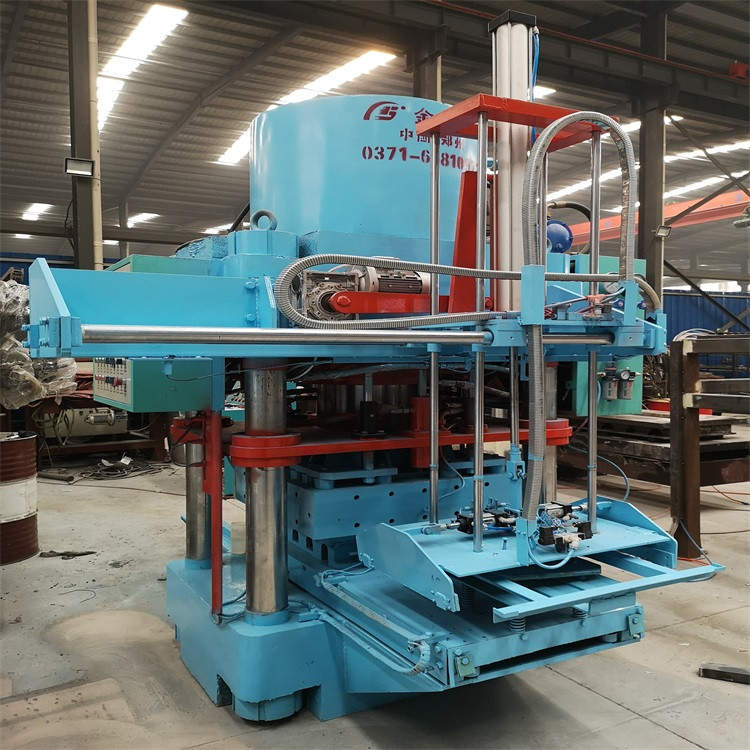
A terrazzo tile machine is a hydraulic press that forms cement-based terrazzo floor tiles — and, on most frames, roof tiles as well — from a mix of cement, stone chips, sand and pigment. The range below covers 250 mm to 1200 mm tile formats, 120 to 800 tonnes of moulding pressure, and output from 2,500 pieces per day up to 6 pieces per minute on the rotary model. Plants run them with two to four operators per shift.
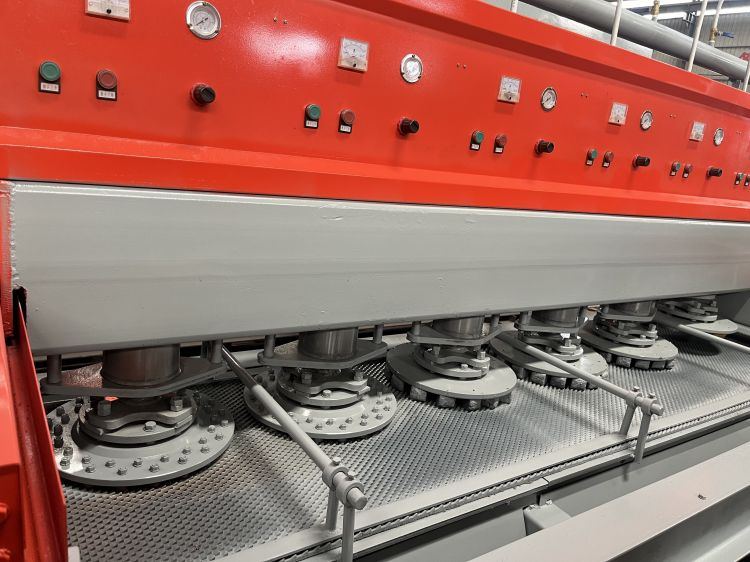
Every machine is built in Zhengzhou, Henan and shipped as a complete production line: press, mixer, feeder, curing racks and — where the buyer wants to sell finished product rather than green tile — a calibrating and polishing section.
The five frames below cover almost every terrazzo operation, from a small single-shift plant making 300 mm utility tiles to a commercial line running 1200 mm slabs. The differences that matter are tile size, pressure and cycle speed — not cosmetics.
| Model | Tile size | Pressure | Output | Operators | Best for |
|---|---|---|---|---|---|
| JS-500 | 300×300 to 500×500 mm | 300 T | 3–4 pcs/min | 2–3 | Entry-scale plant, utility floor tile |
| JS-600 | 250–600 mm floor, 424×337 mm roof | 120–300 T | 2,500–3,000 pcs/day | 3–4 | Mixed floor and roof tile production |
| JS-600D | Double layer, up to 600 mm | 128 T | 6–8 pcs/min | 3–4 | Two-colour face, hard-wearing surface |
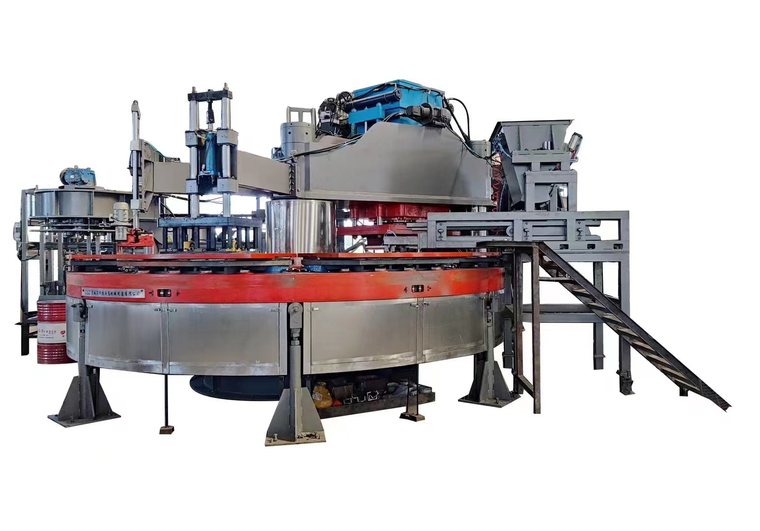
| Rotary | 250–600 mm | Vibration + vacuum | 6 pcs/min (10 s cycle) | 3–4 | Dense indoor flooring, high cycle rate |
| JS-1000 | 800×800 and 1200×600 mm | ~800 T | 2–3 pcs/min | 4 | Large-format slabs, commercial projects |
The JS-600 is the workhorse of the range because it changes moulds between floor tiles of 250–600 mm and 424×337 mm roof tiles on the same frame, at 10–40 mm thickness. If you are not yet sure which product your market will buy, that flexibility is worth more than a higher headline output.
This is the first decision to make, and it is a cost decision more than a quality one.
A single-layer tile is one mix throughout: cement, chips and pigment pressed together. It is the cheapest way to start, needs one feeder, and works well for utility floor tile sold on price.
A double-layer tile separates the face from the body. The face mix carries the colour and the decorative aggregate and is only the top 5–10 mm; the base carries the strength and uses cheap coarse material. The result is a harder wearing surface, better colour stability between batches, and a significantly lower material cost per square metre — which is why almost every commercial plant runs double layer.
The JS-600D presses both layers in one cycle at 128 T, at 6–8 pieces per minute, and can still run single layer when you want to.
Work backwards from the square metres you can sell, not forwards from the machine's rated speed. A worked example with the JS-600:
Two machines with the same tile size can differ in price by a factor of two or more. The five variables that move it:
Because of that spread we quote per project rather than publishing a single figure. Send us your tile sizes, target m² per shift, and local power supply, and you get a configuration with a price against each line item — not a single number with the detail hidden.
The press is the centre of the line, but it cannot run alone. A minimum viable configuration, in process order:
Machines ship with an English operation and maintenance manual, a wiring diagram and a mould list. Engineers are available to attend site for installation, commissioning and operator training; the usual arrangement is a fixed number of days included with the order and a day rate beyond that. Core components — pressure vessel, motor, gearbox, PLC, bearings — are standard industrial parts available locally in most markets, which matters more than a long warranty on paper when a plant is running three shifts.
It is a hydraulic press that compacts a cement, stone-chip and pigment mix into terrazzo floor tiles under pressure, using a steel mould for the tile format. Most frames also produce roof tiles by changing the mould.
From 250 mm to 600 mm on the JS-500, JS-600, JS-600D and rotary models, and 800×800 mm or 1200×600 mm on the JS-1000. Each format needs its own mould, so the practical limit is how many moulds you order.
A JS-600 runs 2,500–3,000 pieces per day; a JS-500 at 3–4 pieces per minute; the rotary model at one piece every ten seconds. Real daily output depends on tile size, mix design, curing capacity and how many shifts you run.
Double layer if you intend to sell into commercial or retail channels and compete on appearance and durability. Single layer if you are entering a price-driven utility tile market and want the lowest entry cost. The JS-600D does both.
380 V/50 Hz is standard. 415 V/50 Hz, 440 V/60 Hz and 220 V/60 Hz are configured at build — motors and panels are set in the factory, not on site, so confirm your supply before ordering.
It depends on the configuration and on how many mould sets are ordered. Confirm the current lead time with your quotation, and allow separate time for sea freight and for site preparation.
Yes. Machines are assembled and test-run in Zhengzhou before shipment, and visitors can see the press working and inspect the build. Contact us to arrange a date.
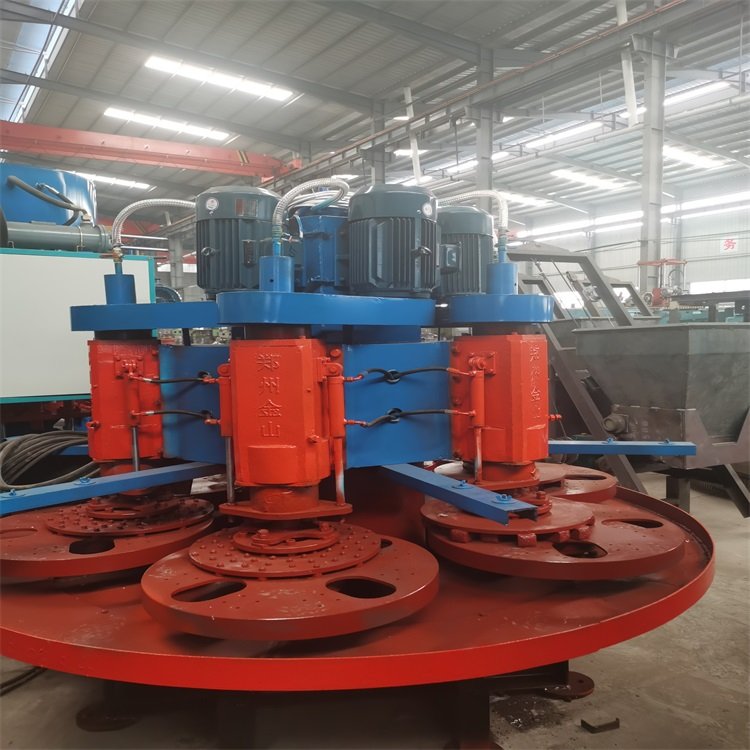
Yes — rotary and linear polishing machines, and calibrating machines, as part of a complete line. See the terrazzo tile polishing machine and the linear polishing machine.
Send four numbers — tile sizes, target m² per shift, single or double layer, and local voltage — and we will return a machine configuration, mould list, power requirement and quotation, with a layout drawing you can take to a builder.
Request a quotation